The 2023 Presidential candidate of the People’s Democratic Party (PDP), Atiku Abubakar has landed a major victory in the United States as part of his ongoing push to prove President Bola Tinubu’s ineligibility to be Nigeria’s president, Oyo EyeWitness reports.
A federal court in Chicago on Tuesday night ruled that Chicago State University (CSU) must turn over all records relating to Tinubu to Abubakar within two days, saying the former vice-president has been able to sufficiently satisfy the purpose for seeking the records, according to the documents of the ruling seen by Oyo EyeWitness.
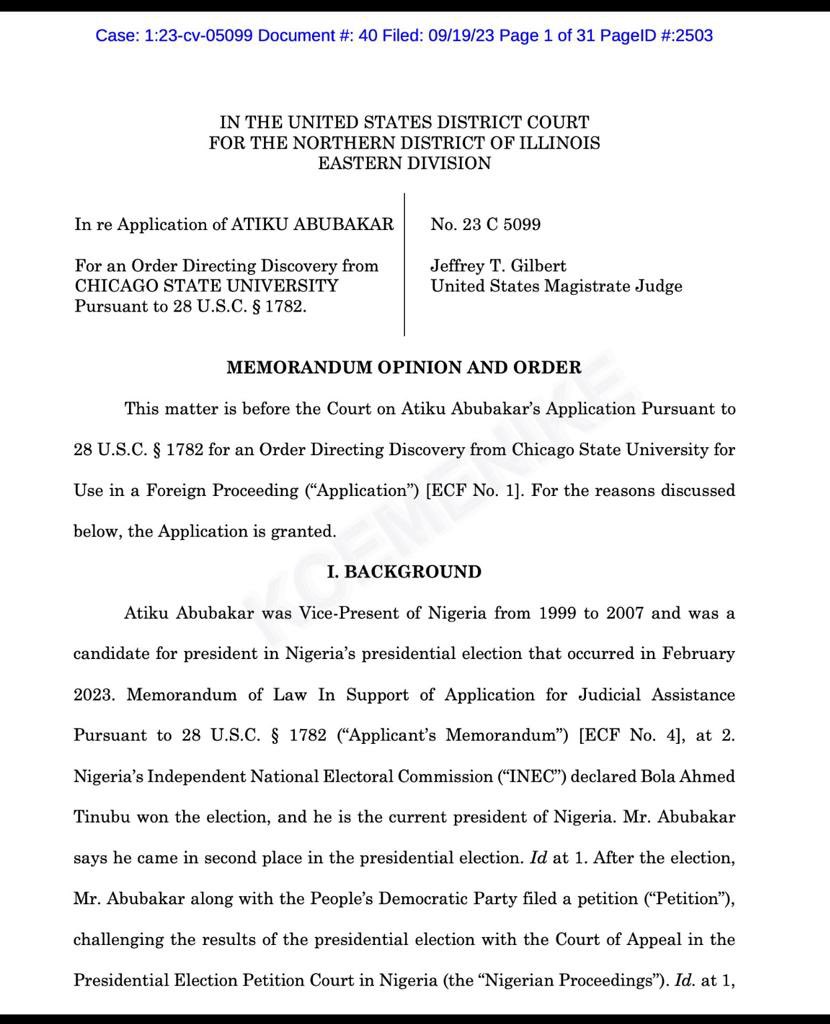
The judge sitting on the case, Judge Jeffrey Gilbert also ordered a deposition of designated CSU officials within two days after the records have been released, noting further that the process can be conducted during the weekend if necessary.
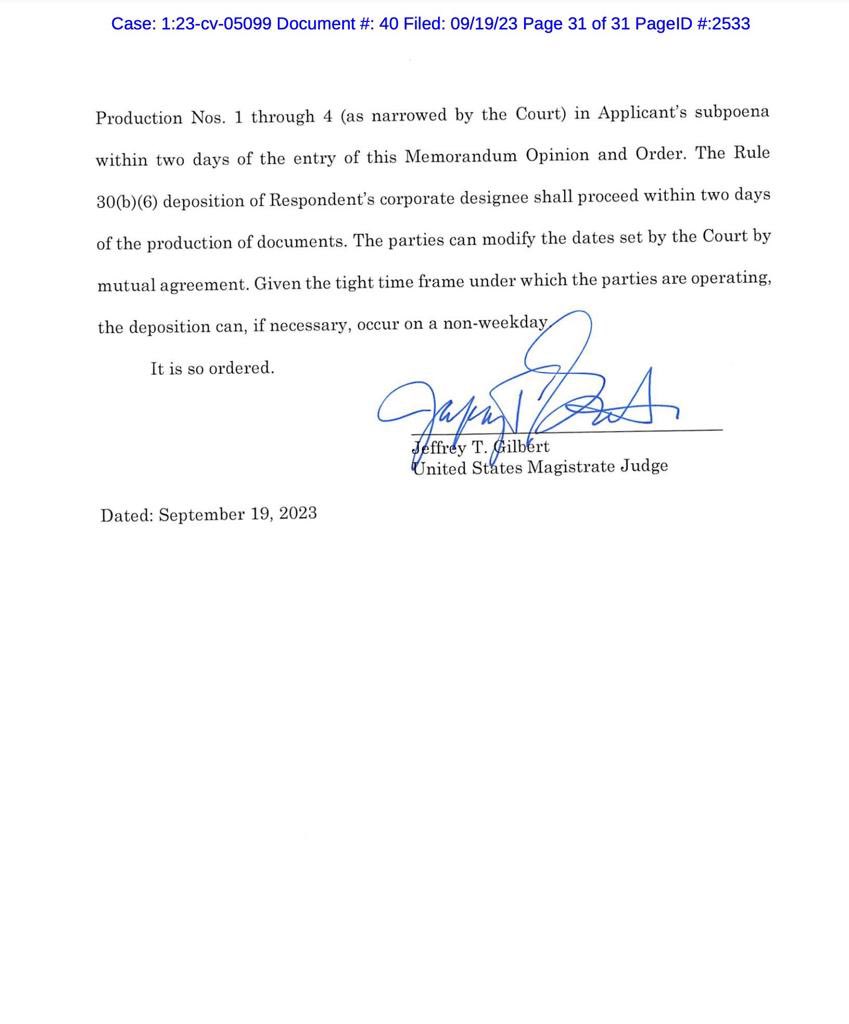
“For all of the reasons discussed above, Atiku Abubakar’s application pursuant to 28 U.S.C. § 1782 for an order directing discovery from Chicago State University for use in a foreign proceeding [ECF No. 1] is granted,” Mr Gilbert ruled. “Respondent CSU shall produce all relevant and non-privileged documents in response to requests for production Nos. 1 through 4 (as narrowed by the court) in applicant subpoena within two days of the entry of this memorandum opinion and order.”
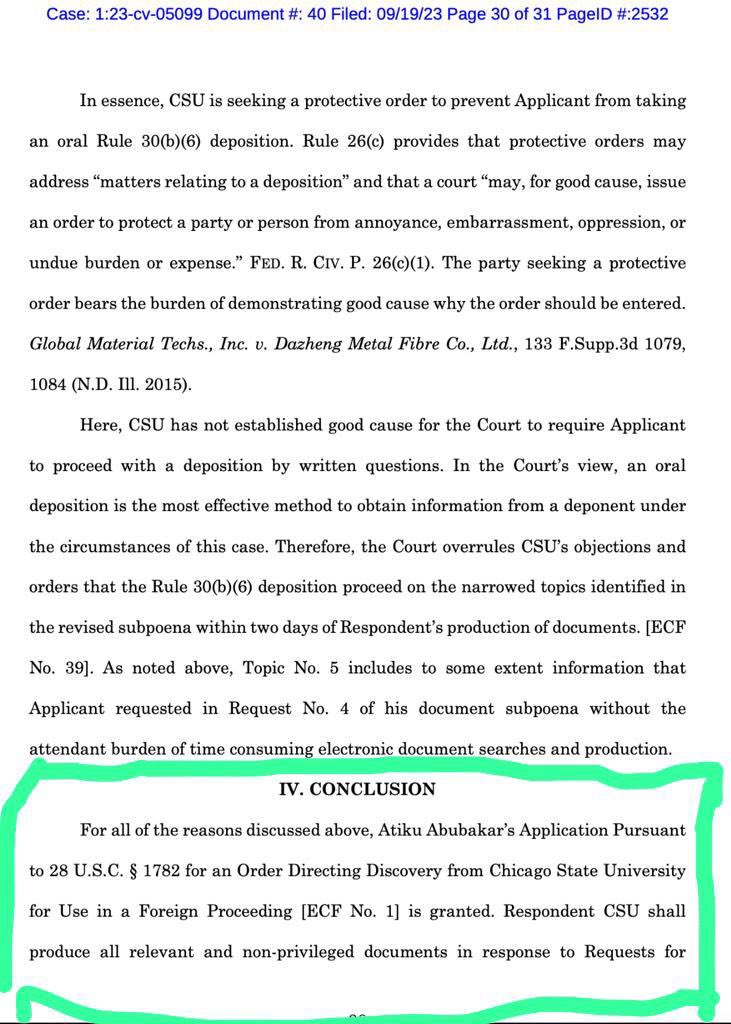
“The deposition of respondent’s corporate designee shall proceed within two days of the production of documents. The parties can modify the dates set by the court by mutual agreement. Given the tight time frame under which the parties are operating, the deposition can, if necessary, occur on a non-weekday,” the court added.
The court ruling comes barely 24 hours after Abubakar filed his appeal to the Supreme Court, following the September 6 judgment of the Presidential Election Petitions Tribunal (PEPT) that upheld Tinubu’s victory.
On August 2, Abubakar filed an application for the court to order CSU to produce all the documents relating to Tinubu, as well as get the school’s administrators to verify the submitted documents under oath.
According to Abubakar, the documents would be used as part of his ongoing attempt to challenge Tinubu’s election in the 2023 general elections.
The candidate of the PDP said Tinubu should not have been cleared to run for president because he had submitted a forged document under oath in violation of the Nigerian Constitution.
Section 137 (1)(j) of the Nigerian Constitution (amended in 2010) specifically stated that no one would be legitimately elected president of Nigeria if the person “has presented a forged certificate to the Independent National Electoral Commission.”
On June 17, 2022, Mr Tinubu submitted a certificate to INEC that was purportedly issued in 1979 and signed by Elnora Daniel.
But Daniel only arrived at CSU in 1998, 19 years after Tinubu claimed to have graduated in 1979.
She left the school in 2008 following a financial mismanagement scandal,14 years before June 2022 when CSU issued yet a fresh certificate Tinubu’s name under subpoena from a Nigerian lawyer who had inquired about his education there.
These irregularities prompted Abubakar to file the suit to compel CSU to produce records relating to Mr Tinubu and make its top officials available for deposition to certify the produced records, according to the Nigerian opposition leader’s lawyers.
During a hearing on the matter on September 12, the CSU’s lawyer Michael Hayes had said the school could not authenticate Tinubu’s certificate if asked under oath, although he attended the school and graduated in 1979.
Tinubu’s lawyers, led by Christopher Carmichael, argued that the court should not grant Mr Abubakar’s application because it was a frivolous expedition aimed at soiling the Nigerian president’s image.
Mr Tinubu’s lawyers also argued that Nigerian Supreme Court would not accept fresh evidence that was not produced during the tribunal proceeding.
However, Abubakar’s team, led by Angela Liu, had argued that the Supreme Court would accommodate the fresh facts under unique circumstances, especially as they were not available to the Court of Appeal, which is the court of first instance in a presidential election dispute.
But Judge Gilbert said courts across the U.S. have traditionally taken a broad and liberal view in granting applications under Section 1782, a statute that allows the release of documents and evidence domiciled in the U.S. to be obtained and used in a foreign proceeding.